
Bound for hell

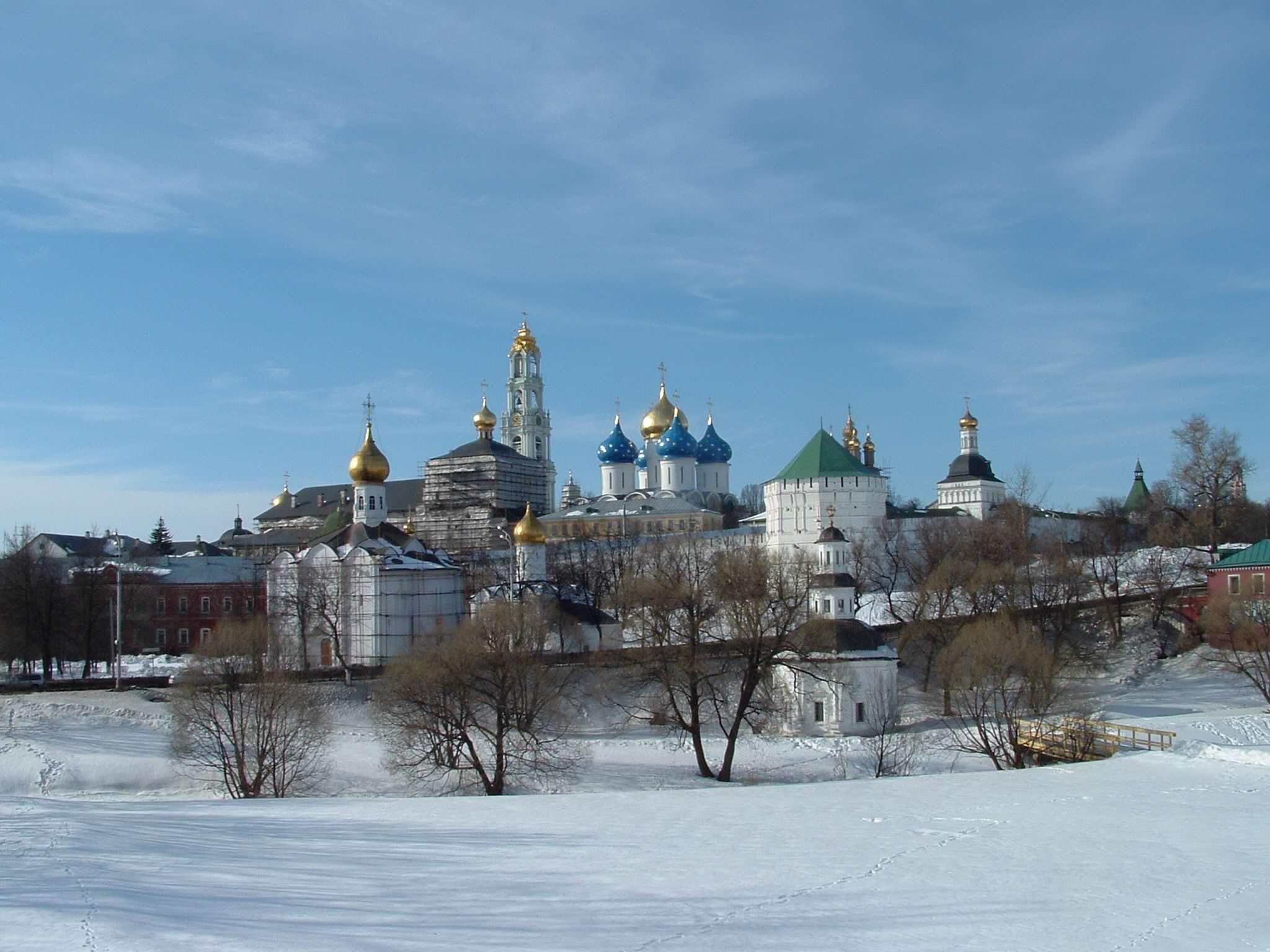
My father recently sent me a photo from outside the apartment he and my stepmother share in Moscow. It’s a tiny one-room flat that once belonged to my stepmother’s grandmother, Anastasia Tsvetaeva. Anastasia’s sister, Marina Tsvetaeva, is still one of the most beloved poets in Russia; it was lesser known that Anastasia wrote poetry, too, but the hardship and heartshatter that both women endured is well documented.
I once read Anastasia’s own poetry back to her in that tiny room, poems she’d written in English but could no longer understand. The memory of sitting with her there, next to the piano that took up most of her small room, has the flavor of another time, another life. Sometimes it makes me miss a Russia I never knew.
“No, be assured, my gentle girls, my ardent
And lovely sisters, hell is where we’re bound.”
—Marina Tsvetaeva, from “Bound for Hell,” 1915
The photo my father sent shows snow-covered sidewalks and bare birch trees, someone shoveling in the distance. I have older photos very similar to it—different apartments, different winters, a different someone shoveling in the distance. Different times I’ve sat in small rooms being served cucumbers with dill, or blini pancakes.
Though I was born and mostly raised in Montana, I’ve been homesick for Russia ever since I left in 1991 at the age of 14, just weeks before the coup that collapsed the Soviet Union. Even while watching Moscow and St. Petersburg morph into unrecognizable cities, I missed it, that land, that language, some indefinable, ancient pull. It’s an ache of belonging, and of loss.
I’d like to say my longing is generational, since my father was born in the Ural Mountains and grew up in Leningrad. But his parents weren’t from Russia, at least not as its current borders lie. They were Jewish, and so were confined, as all Jews in the Russian empire were, to shtetls in the Pale of Settlement, the only band of territory Jews were allowed to live, their lives and occupations and movement strictly controlled and their communities at the mercy of violent pogroms. My grandfather came from a small village in Ukraine, my grandmother from another near Belarus.
The history of that entire part of the world is thick like blood. Miles of forests, birch and poplar, and wide grasslands, holding fast through shifting territorial lines and allegiances all through Eastern Europe and the Caucuses, lands and peoples linked by thousands of years of invasion, control, tribute, and trade with the Ottoman and Mongol Empires.
Its history runs like blood, too: there’s the raiding and enslavement of Slavic peoples, who knows how many tens or hundreds of thousands or more kidnapped and sold away from their homes to the wealthy in empires south and west of the Black Sea. That slave route operated unbroken for nearly a thousand years.
There are the Jews whose ancestors had migrated to Europe centuries before, who ended up in lands controlled by the Russian empire after over a thousand years of oppression, expulsion, and massacres so violent and comprehensive that it’s estimated the DNA of almost half of Ashkenazi Jewish people comes from only four mothers. Four women who survived in a community that by their time had been massacred down to a few hundred people.
That land bears other scars, too, ones that run a different kind of heartblood. Lithuanians were the last people in Europe to convert to Christianity, first enduring over a century of invasions and battles pursued by the Crusades, and other pressures from Catholic and Orthodox powers—all that after the previous century’s attacks from the Golden Horde in the north of the Mongol Empire. Jogaila, who in 1386 was crowned king of Lithuania in exchange for being baptised and forcing conversion on his people, subsequently allowed Christian churches to be built for the first time. He also ordered sacred oak trees to be cut down. Household grass snakes, who were kept in homes as protective spirits and were considered dear to the sun goddess Saule, were ordered killed.
The cutting down of sacred groves and the destruction of sacred springs throughout Britain and Ireland as the lands and people were bent to Christianity—having spent previous centuries recovering from Roman occupation—is more well-known than the histories of the same happening throughout the European continent. But those lands, too, are laced with memories of spiritual land, water, and animal connections that power spent centuries erasing, usually with violence.
What became of the people whose cultures the Roman general Tacitus recorded in 98 CE in his Germania—the Vangiones, Triboci, Nemetes, the Gauls, and countless other peoples? Tacitus wrote that their sacred places were trees and waters rather than human-built temples, and he wrote of the role of women in leadership. What memories does the land hold of those peoples? When were their holy trees cut down and how did they cope with the loss?
“To your mad world—one answer: I refuse.”
—Marina Tsvetaeva, from “Poems to Czechoslovakia”, 1939
When I was researching my first book, I read a great deal on the science of epigenetics, related to what’s become known as intergenerational trauma, focusing on the work of scientists like Rachel Yehuda and Lars Bygrov.
“What Yehuda found in her early research was that the children of Holocaust survivors were three times more likely to develop PTSD if exposed to a traumatic event than were demographically similar Jewish people whose parents were not Holocaust survivors. This is not, to be clear, a change in a person’s genetics; it’s a change in how a person’s genes will respond to their particular environment.”
Yehuda repeated those results in studies of the children of women who were pregnant and present at the September 11, 2001, attacks on New York City’s World Trade Center. Other researchers have shown epigenetic effects in children whose mothers survived the Dutch Hunger Winter; and still more comes from Maria Yellow Horse Brave Heart’s research on historical trauma in Native American people. Epigenetics is still a relatively new field, but its conclusions about intergenerational trauma are well established.
After the Russian Revolution of 1917 that overthrew the tsardom in favor of communism, my grandparents came to Leningrad. They walked straight out of the pogroms, massacres, restrictions, and theft of children that Jews had endured for over 2000 years, a history that had not yet ended when they each left their villages behind to help build a new nation.
My grandparents, Jacob and Anna, enjoyed an extremely short few years of believing they could finally live and work in the world simply as people. A few years, before Russia’s—and especially dictator Joseph Stalin’s—anti-Semitism kicked back in. They endured returned restrictions on Jewish people, Stalin’s paranoia and threats of violence against and expulsion of Jews, and then the Siege of Leningrad during World War II, which my grandfather barely managed to survive, almost becoming one of the thousands dying each month of starvation. Jacob and Anna endured war and poverty, dictatorship and societal upheaval, and never escaped the millennia of prejudice and hate that had stalked their ancestors.
I’ve often wondered what of their experiences I carry in my own genes. And that of their parents and their parents and on and on and on. Those histories, and my own personal traumas, made their way into my children, through the blood and cells we shared as they became. The effects that accumulation will have on their lives is unpredictable.
As far as I know, there is no study on intergenerational trauma that gives it an end date, an end generation.
I read a study a while back on probable PTSD symptoms showing up in the medical records of men of ancient Mesopotamia who’d been at war. The reports say they were haunted by ghosts. What happened to the man of 14th-century BCE who’d just come home from his mandatory three-year rotation in the Assyrian army? Could he find healing in the land, or in his children; or did his pain turn inward to depression or outward to attack others?
What happened to the young mother in 1226 who’d been kidnapped by slave traders in her Swedish village and found herself serving in an Ottoman household? Did she ache for home, for the relatives and sacred trees and waters she’d been torn from? What happened to those people’s children, and grandchildren and great-grandchildren, and those of their villages and nations?
What happens to us?
Patrick Teahan, a licensed therapist who maintains a YouTube channel specializing in childhood trauma, recently posted a video of a bit of his own family history: One day in the winter of 1920, his great-grandmother, who had just days before given birth to twins, was at home in County Kerry, Ireland, when members of the Black and Tans, a paramilitary British force, dragged her, her newborn twins, and the rest of her children, outside while the soldiers raided their home.
Teahan’s grandfather, who was 14 at the time, came home to find the house ransacked. His mother died the next day. The experience, Teahan says, reverberated in cycles of violent abuse, from his grandfather to his father and onto him.
“My grandfather’s home invasion was 106 years ago. The trauma didn’t just pocket in 1920 and filter out. It went through the generations until someone did something different.”
His point in telling the story is to demonstrate the ways intergenerational trauma plays out. He gave background on who the Black and Tans were, how they were recruited and trained, and the enormous violence they inflicted on Irish people; and the parallels between their makeup, recruitment, and training, and that of the U.S. government’s ICE terrorists today. Those who inflict violence on others, he reminds us, are rarely rewarded in the end—power will discard them as soon as they no longer serve a use. In Teahan’s words, “Power does not love you,” but all have to live with what they have done. Many Black and Tans, when the the force was disbanded, were rehired and posted to then British-ruled Palestine.
Teahan’s story reminded me of Arnold Schwarzenneger’s personal video a few years ago, about his father, an angry man hiding in alcohol, the inevitable outcome of rage and shame many men experienced after participation in World War II as Nazi soldiers:
“They drank to numb their pain. Their bodies were riddled with injuries and shrapnel from the evil of war, and their hearts and their minds were equally riddled with guilt. . . . They were all broken in the same way.”
The perpetrators of violence have to live with what they have done, but so do their victims, and descendants of both not even born.
It wouldn’t surprise me to know that all of us carry widely varying degrees of ancestral hardship, oppression, violence, and shame deep in our marrow. I wonder about the grief of those who saw the sacred groves felled or witnessed the massacres of their mothers, sisters, and brothers as witches; and what is carried by those who themselves participate in massacres of people, and what each passes onto their descendants, and for how long.
I wonder, a lot, about my own lineage, how an ancestral legacy of fear and oppression and violent prejudice that extends back millennia can transmute itself. How it turns, in cases like my grandparents, to unshakeable moral codes of honesty, hard work, and generosity; yet in others warps into a strangely shaped sense of entitlement, license to perpetuate the violence of generations on others.
The neurochemical balance that helps humans maintain a sense of right and wrong, love and hate, is shaped by shadows, some of them ancient, some of them hiding in our own cells.
Maybe my yearning for Russia is a short intergenerational root, or maybe it comes simply from having lived there and fallen in love with it as a teen. Maybe if I visited my grandfather’s Ukrainian village I’d feel something entirely different, something closer to what I feel in Montana, as if I want to spend every day of the rest of my life walking the lands barefoot and drinking the waters unfiltered. Or maybe I’d feel the terror of generations living with that land under the threat of violence and expulsion, never quite able to feel safe, never able to feel at home. Never feeling a sense of belonging at all.
The say ars longa, vita brevis—roughly translated as “skill takes time, life is short”—but maybe vita is far longer than we care to think about. One story might take a lifetime to write well, but it draws on years and generations beyond count.
Our stories don’t just live on by being told. They live on because the lives of those long gone are carried as complex messages in our DNA, as sparks in our hearts. They live on because we live on.
“A kiss on the forehead—erases memory.”
—Marina Tsvetaeva, “a kiss on the forehead,” 1917
Until March 31, 5% of On the Commons revenue will be given to the 2026 James Welch Native Lit Festival. Last quarter’s 5% went to Firekeeper Alliance. Receipts of revenue return can be found here.
Nia, this is so so beautiful and poignant and real. I often think about it in terms of the lands we live on as well, the oaks, the waters, of lives lived before us and what memory is embedded in the soil we walk on. So much memory, so much pain and beauty combined. So grateful to have read this today my friend. 💜
Thank you, Nia. I found the excerpts especially moving. And the Lithuanian mythology! I had no idea they fought the tyranny of Christendom for so long, and had their own unique pantheons.
I try not to linger on the generational trauma, because what can we do? We can't shed it. Perhaps we can be easy on ourselves, and each other.